
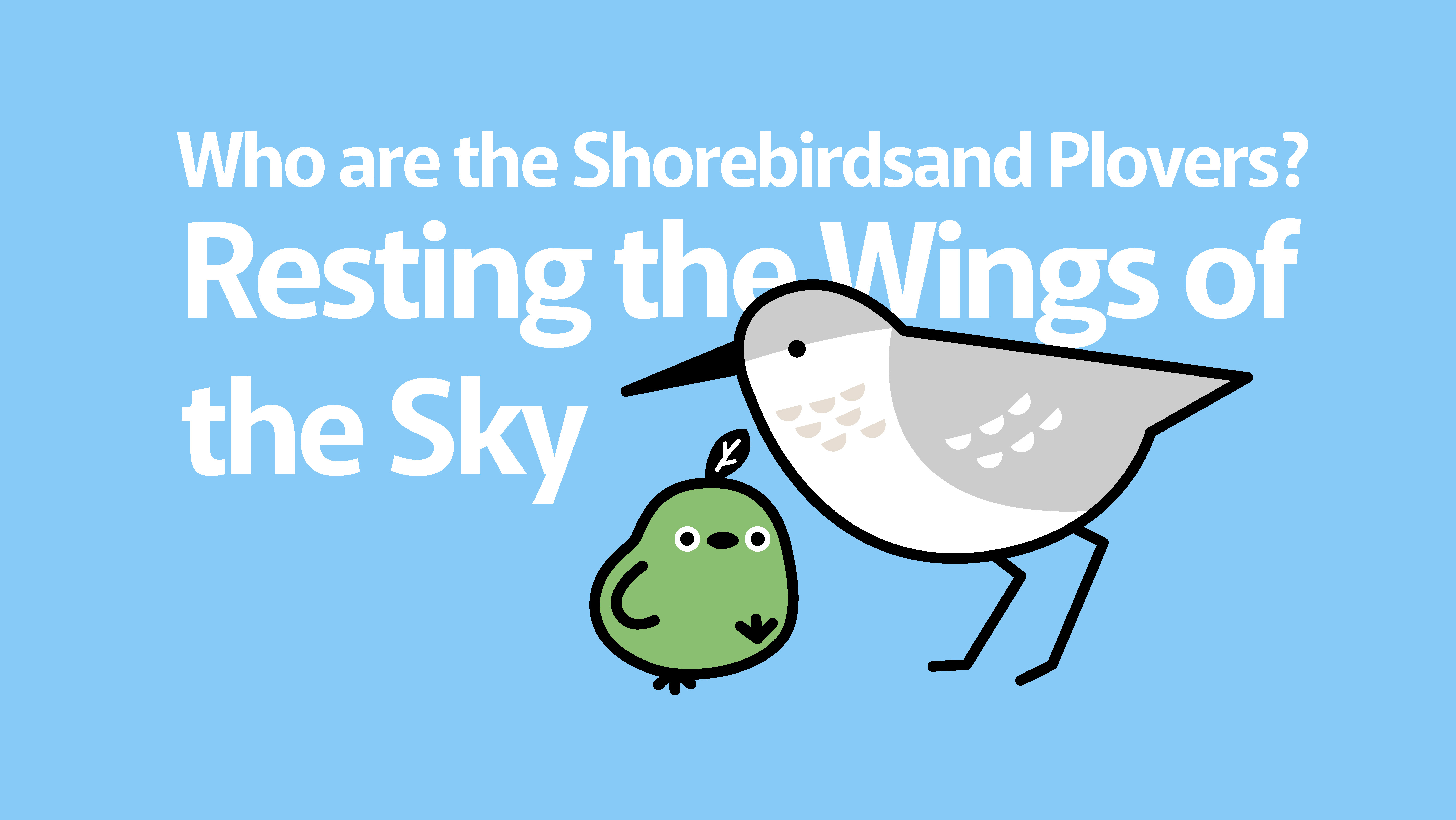
Hello, everyone! Today, I’d like to talk about our wonderful feathered friends, affectionately known as ‘Shorebirds and Plovers.’ These small waterbirds that decorate our mudflats and water edges give us many surprises with their life and migration patterns.

Globally, shorebirds and plovers are truly ingenious travelers. Some species fly over 10,000 kilometers one-way, from Alaska to Australia! The mudflats and wetlands in Japan serve as a rest stop for them, a place where they can rest their wings and fill their bellies before continuing on their journey.
Each shorebird and plover has a unique beak, specialized for their particular diet, allowing them to coexist smoothly even in the same habitat. Some choose to fly at night during migration. This strategy has its advantages, such as avoiding predators and benefiting from more stable air currents.
As migratory birds, shorebirds and plovers visit us in the spring and fall. The mudflats and riverbanks they visit are like stages for their descent. There, they enjoy a respite from their long journey from the south.
By the way, there’s a knack for observing these birds. Check the tide levels and head out at just the right time. When the mudflats are visible, that’s your best chance to observe them.
Sadly, the number of shorebirds and plovers is decreasing. One of the causes is the reduction of their resting habitats – the wetlands. This is surely an issue that we must contemplate.
Lastly, ‘Shorebirds and Plovers’ is a term used to collectively describe birds from the order Charadriiformes, including the families of Scolopacidae and Charadriidae. With small bodies ranging from 10 to 60 centimeters in length, they fly extensively and live on a global scale. Please continue to pay attention to them in the future.
Next time you visit the seaside or riverbank, try to spot these distant travelers of the sky. Imagine their stories in your mind. Surely, you will find something new!


