
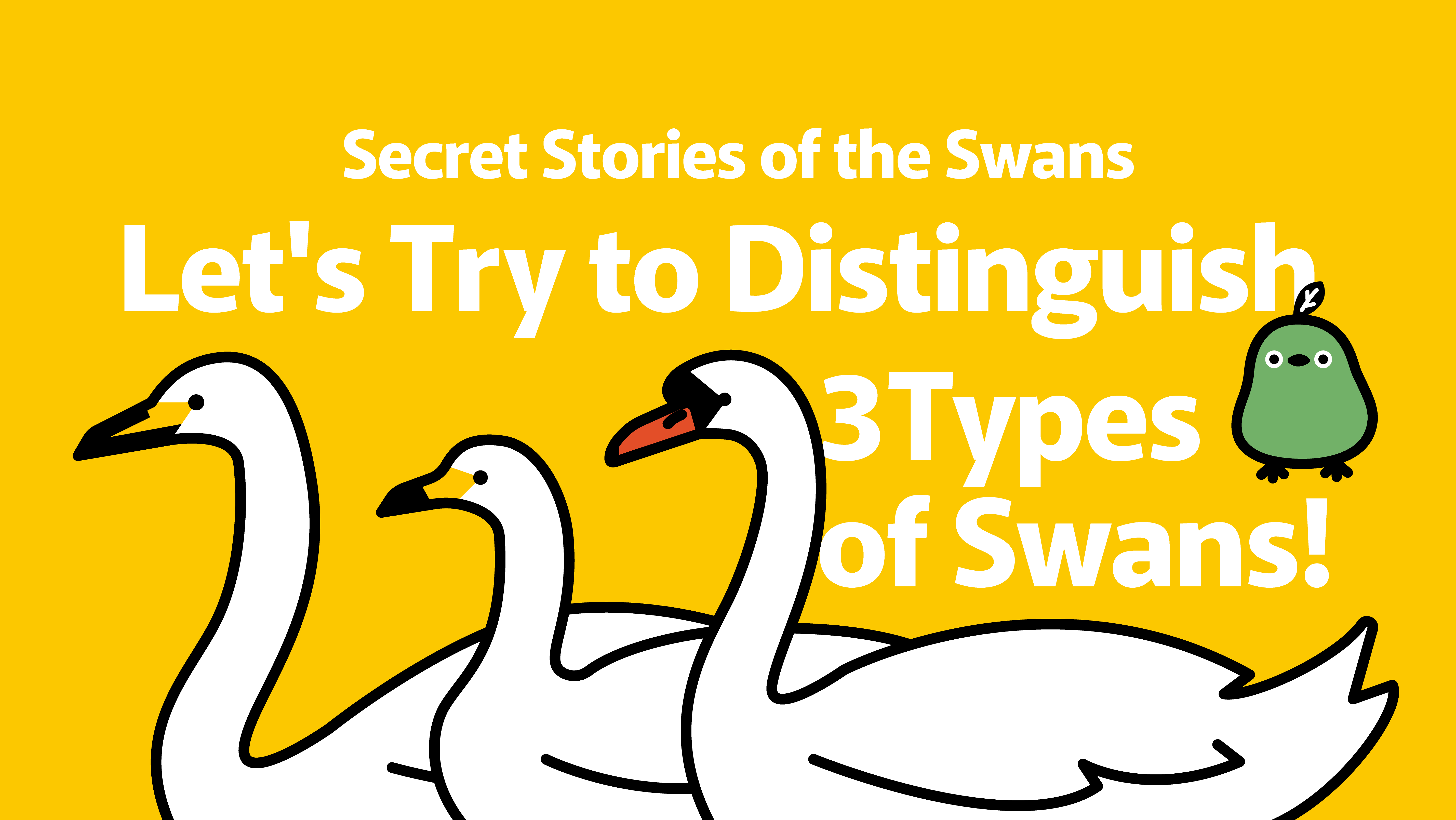
Good evening, everyone! With the arrival of winter, swans grace our nearby nature, bringing peace to the hearts of those who watch their elegant dance. Though they may look similar, there are subtle differences between these swans. Today, let’s take a closer look at how to distinguish the Whooper Swan, the Tundra Swan, and the Mute Swan.

The key to telling the Whooper Swan and the Tundra Swan apart lies in their beaks. The Whooper Swan has a larger yellow area on its beak, with a slightly pointed tip. The Tundra Swan, on the other hand, has less yellow on its beak and a more rounded tip. Its neck is also thicker. You can spot the size difference when they’re together, but it’s a bit harder with just one.

The Mute Swan, as its name suggests, has a charming ‘knob’ on top of its beak. Its beak is orange, setting it apart from other swans. This unique feature makes it relatively easy to identify.
Swans breed in Russia and typically overwinter in Hokkaido or Honshu in Japan. Their diet includes aquatic plants, grains, and insects. Swans also have a romantic side – they’re said to mate for life. How lovely! For them to migrate to Japan, safe waters and ample food are necessary. The Whooper and Tundra Swans are known migratory birds, while the Mute Swan was originally an introduced species. Now, it can be seen throughout Japan.
Next time you see a swan, remember this talk and try to identify its species. You’ll surely find new charm in their beauty. Enjoy the winter moments observing the graceful swans and their unique features. Until next time, farewell!


