
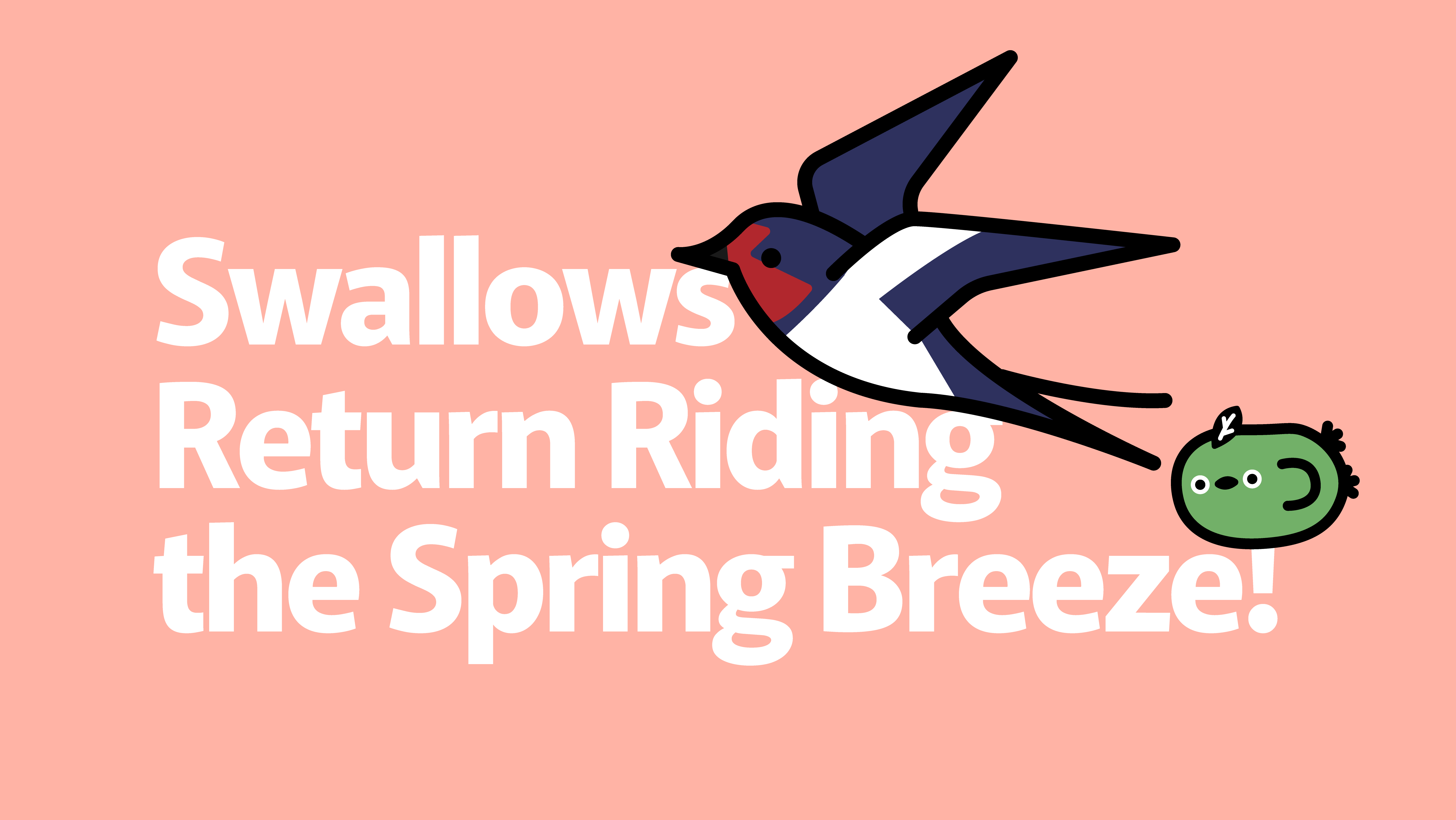
Hello, everyone! Swallows have already been spotted in Japan, haven’t they? Seeing swallows fluttering in the spring sky excites us that the end of winter and warm days are starting. But, there are many secrets about these adorable swallows that are surprisingly unknown.
Swallows are migratory birds, with about 80 species worldwide. Five species visit Japan with the arrival of spring. Among them, the swallow we commonly see is actually a great traveler. With an impressive contrast of navy blue on the back and red on the throat, and only about 17cm in length, they fly the long distance of 3,000 kilometers from Southeast Asia, not in groups but individually, and arrive at the homes in Japan in spring. Then, the males arrive first and start building nests for their families.

Swallow nests are actually very intricate. They are made by mixing mud, dead grass, and their own saliva. Making nests under the eaves of human houses is a clever strategy to protect their nests from natural enemies like snakes, as swallows are not good at fighting. They know that predators are less likely to approach where humans are.
Since ancient times, swallows have been considered “good luck” and were especially cherished by farmers. As birds that eat pests, they were symbols of bountiful harvests. Therefore, a house where swallows made their nest was seen as a sign of prosperity and welcomed as a mark of thriving business.
During the breeding season, they showcase their chirping, “Chubi-chubi-chubi-chururururu.” This unique chirping is made possible because of their well-developed syrinx.
The spring that brings swallows is not just a change of seasons. It’s a story of long history and bonds where humans and nature have coexisted well. Let’s look forward to the safe return of these little adventurers this year as well! See you next time!


