
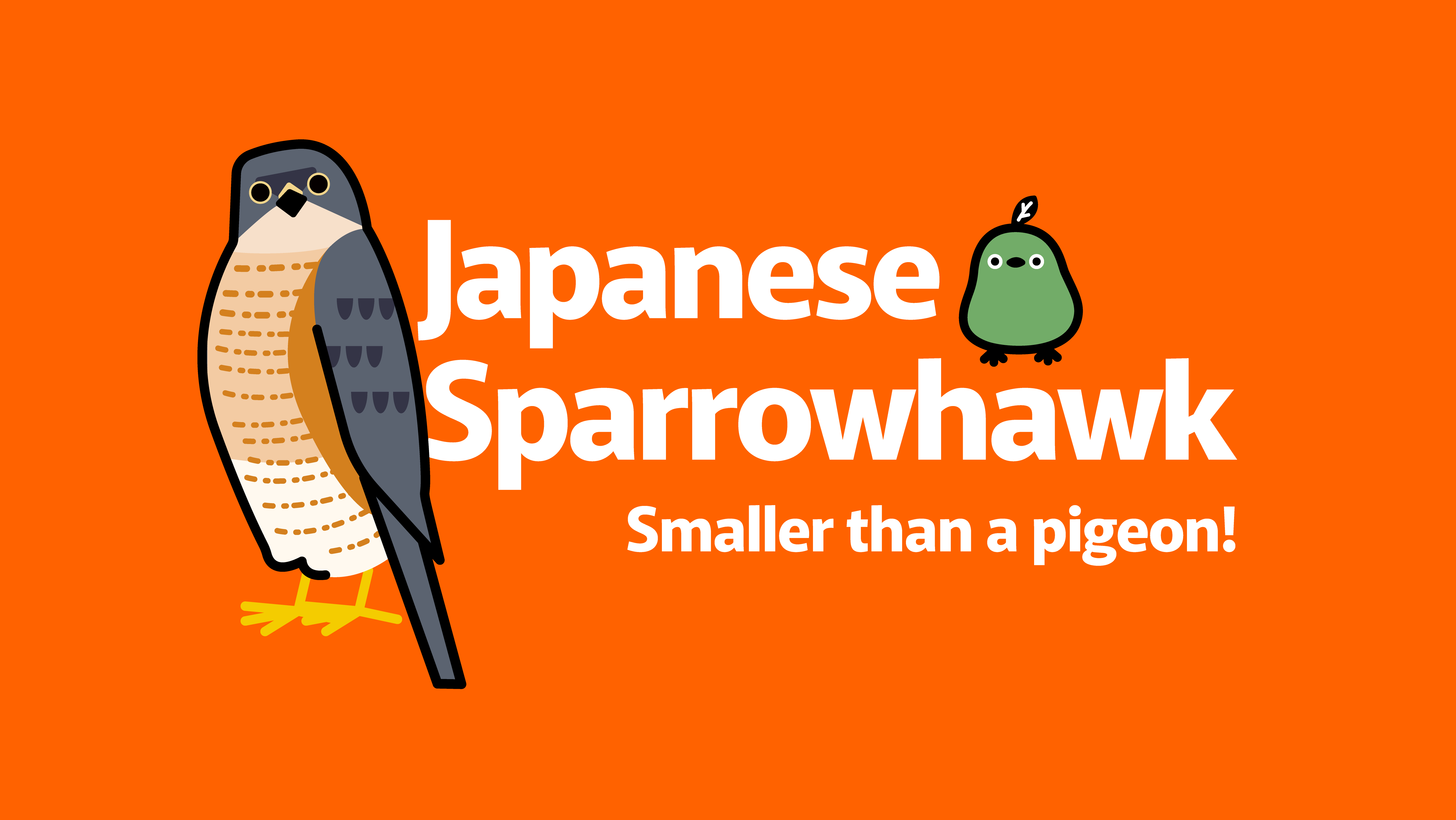
Hello, everyone! You might not be familiar with the name “Japanese Sparrowhawk.” This bird, known as the smallest hawk in Japan, is famous for its bold nature, which is surprising given its size. Today, I’ll share some interesting facts about the Japanese Sparrowhawk.
The Japanese sparrowhawk has a body length of 27cm for males and 30cm for females, making it larger than a brown-eared bulbul but smaller than a pigeon. The males don a blue-gray back with a vibrant orange chest, while the females feature a calm gray-brown back with pale brown horizontal stripes. This color difference is a significant clue in distinguishing between males and females. Juveniles have vertical stripes on their chests and heart-shaped patterns on their bellies, making their growth process quite adorable. The Japanese sparrowhawk primarily feeds on small birds and insects, capturing its prey with agile movements that showcase professional skill.

What’s fascinating is the sparrowhawk’s nesting habits. Instead of using branches found on the ground, it breaks off thin branches from living trees with its beak, presumably to avoid bacteria on fallen branches. For the finishing touches on its nest, cedar leaves are used for their antibacterial properties to protect the chicks.
During the breeding season, the Japanese sparrowhawk exhibits strong territorial instincts, aggressively threatening any bird that comes within 50 meters of its nest. The presence of the sparrowhawk impacts the surrounding ecosystem as well. For example, it’s known that azure-winged magpies “borrow” the area around the sparrowhawk’s nest for safe child-rearing. This is because the sparrowhawk’s defensive behavior provides a certain level of safety to other bird species. However, the relationship is changing due to the increase of crows in urban areas.
Despite its small size, this bird with its valiant posture is likely to attract more attention. You might even be able to see the Japanese Sparrowhawk in action in urban parks or along city streets. Until next time!


