
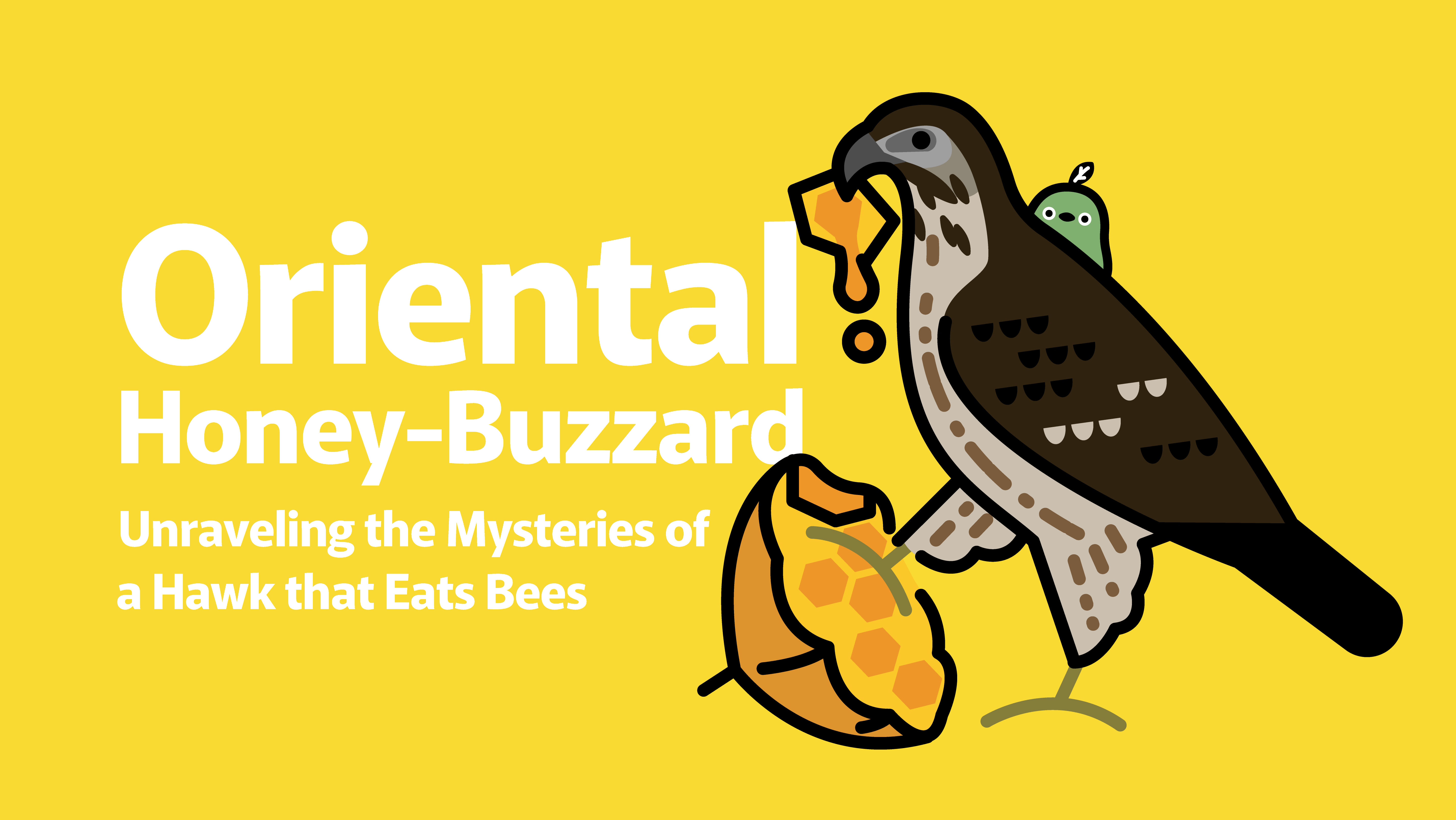
Have you ever heard of the Oriental honey-buzzard? This fascinating bird is a member of the hawk family and primarily feeds on bees. Let’s delve into the life and characteristics of this unique bird!

The Oriental honey-buzzard measures about 57-61 cm in length, with females being slightly larger than males. Compared to other birds of prey, they have shorter wings. Their plumage varies from dark brown to light, with individual differences in feather color and patterns making them easy to identify. Males have two black bands on the wingtips and tail feathers, and their eyes are black. In contrast, females have thinner bands and yellow eyes. These differences make it enjoyable to distinguish between the sexes.
The most remarkable characteristic of the Oriental honey-buzzard is its diet. They primarily prey on bees, such as hornets and paper wasps. During the summer and winter, they tear apart nests filled with larvae and pupae and bring them back to their nests to feed their young. Astonishingly, they even dig up nests of ground-nesting bees like the Japanese giant hornet and consume them. When bees become scarce from autumn to winter, they may also eat insects, small birds, frogs, and snakes.

One might worry about them getting stung while catching bees, but the Oriental honey-buzzard has excellent defenses. Their thick head feathers make it difficult for bee stingers to penetrate, and some theories suggest they are immune to bee venom. Interestingly, when they attack a bee’s nest, the bees often do not retaliate. It’s a mystery, but they might be releasing pheromones or emitting an unpleasant odor to ward off the bees.
The Oriental honey-buzzard arrives in Japan in early summer, breeding from Kyushu northwards. In autumn, they migrate to Southeast Asia to spend the winter. They return to the same location every year, reusing and expanding their nests, which can become quite large. Under these large nests, the larvae of the scarab beetle, Protaetia pryeri, also develop, showcasing a fascinating cycle of nature.
Next time you encounter the Oriental honey-buzzard and its unique habit of hunting bee nests, make sure to take a closer look! Until next time!


