
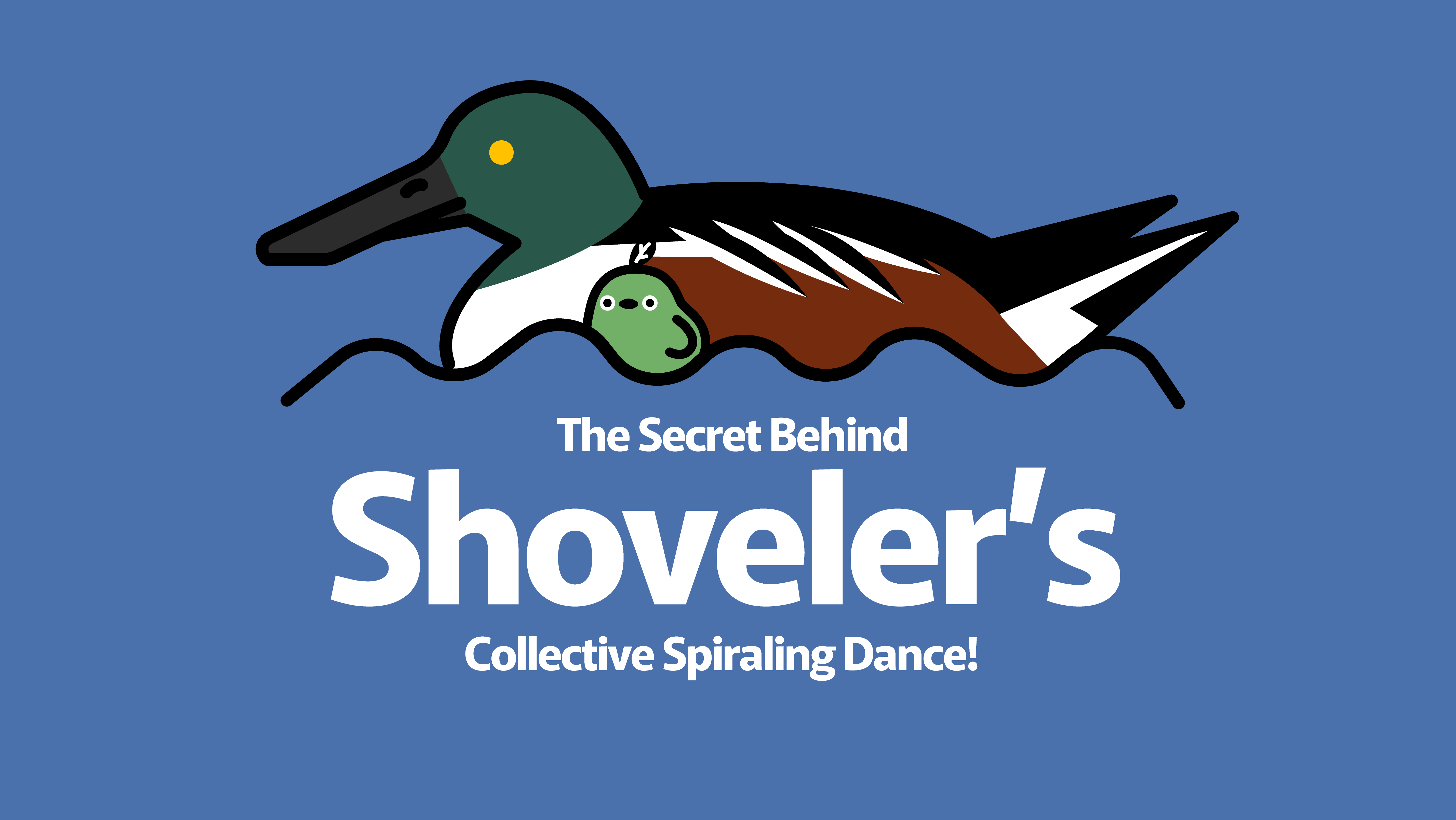
ello, everyone! In the waters close to us, a slightly unusual visitor appears. Its name is the “Shoveler.” True to its name, this duck, with its wide bill, not only looks a bit different but also has a very unique way of finding food.
Shovelers have a body length of about 40 cm, slightly smaller than the Mallard or Spot-billed Duck. During the breeding season from spring to summer, males display a vivid, glossy dark green on their heads, presenting a beautiful sight that catches the eye. Their chests are white, and their sides are a reddish-brown, featuring a distinctive and vivid coloration. In contrast, females and males outside of the breeding season have a subdued brown plumage, blending in with the ground and dead grass. This allows them to live inconspicuously in nature!

As its name suggests, its most significant feature is its shovel-like wide bill. This unique shape is related to their feeding method. They specialize in eating plankton and small aquatic organisms floating on the water’s surface. Using their wide bills, they suck in water along with food, filtering the water through a filter inside the bill while eating. This allows them to obtain food sources that other birds seldom eat.

However, the most astonishing sight is the teamwork displayed by flocks of Shovelers. Their rotating motion on the water surface is reminiscent of synchronized swimming. But this behavior is not for play; it hides wisdom that enhances their foraging efficiency. By rotating in a group, they create a vortex in the water, generating an upward flow that brings plankton to the center. This allows them to efficiently consume food, much like gathering dishes on a large plate.
Shovelers prefer waters rich in plant plankton. Their wisdom in finding abundant feeding spots offers us a precious opportunity to glimpse the lives of many creatures living in nature.
Next time you spot a flock of Shovelers at a lake or pond, take a moment to observe their rotating behavior. This natural, coordinated feeding method is sure to warm your heart. See you next time!


