
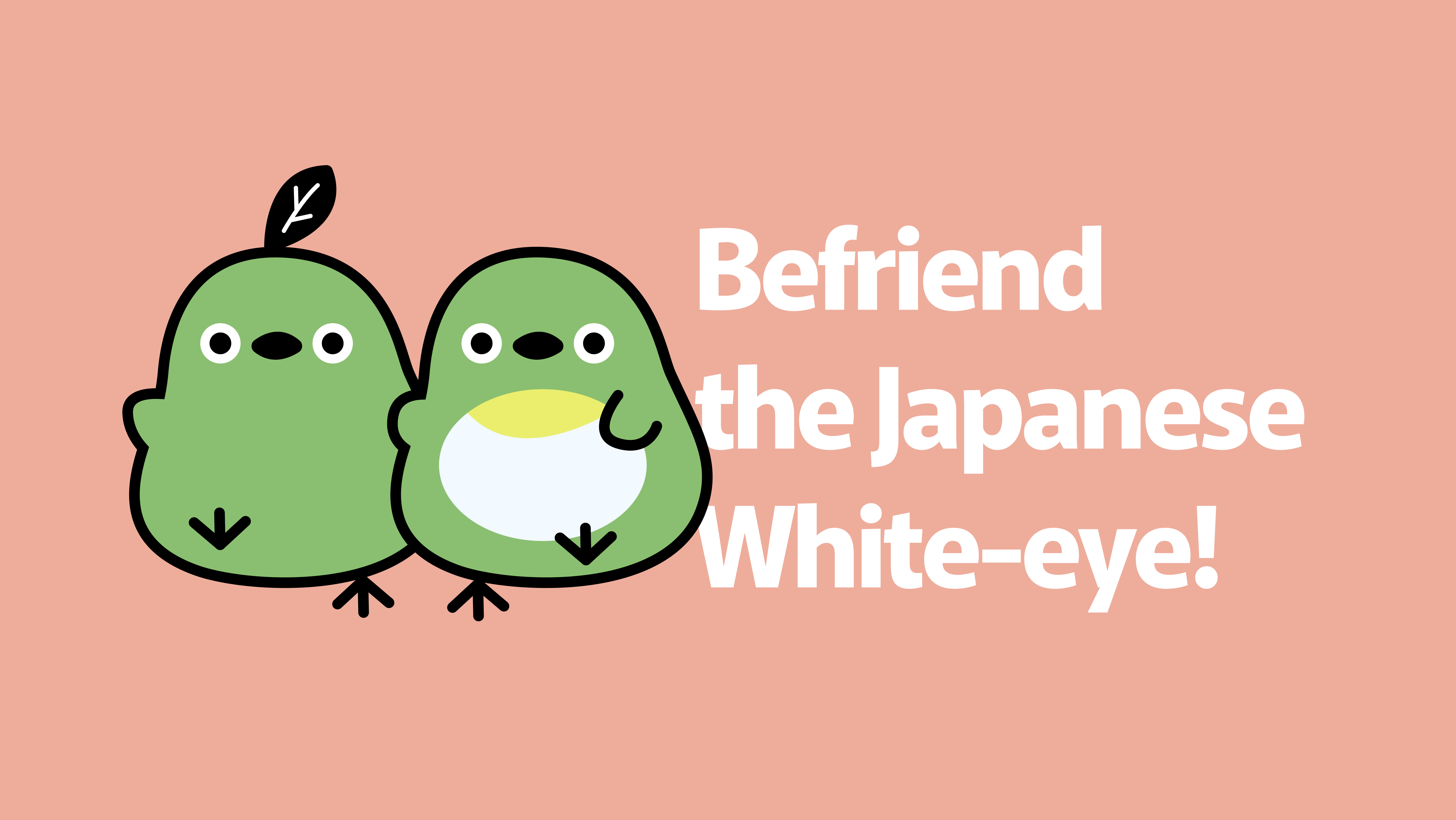
Hello everyone! Today, I would like to talk about the Japanese White-eye, a small bird that is close to us, yet there are many things about it that we surprisingly do not know. The Japanese White-eye is called ‘Mejiro’ in Japanese, which translates to ‘white-eye’ in English, because of the distinctive white ring around its eyes. It has a small body, slightly smaller than a sparrow. Its beautiful green feathers are often mistaken for those of the Japanese bush warbler, but they are actually a bit different.
You know the bird often depicted with plum blossoms in Japanese paintings? You might think it’s a Japanese bush warbler, but it could actually be a Japanese White-eye! The Japanese White-eye loves the nectar of plum blossoms and frequently visits the flowers in spring.

The Japanese White-eye has a history of being called ‘Mejiro’ and being cherished in Japan since the Muromachi period. In kanji, it is written as ‘繡眼児.’ In English, it is known as the ‘Japanese White-eye,’ which also comes from the white ring around its eyes.
Furthermore, the tongue of the Japanese White-eye is very unique! Since birds do not have teeth, they need to be creative in how they swallow their food. The tongue of the Japanese White-eye is shaped like the character ‘へ’ and has protrusions that help it firmly catch its food. Additionally, the tip of the tongue is finely divided like a brush, allowing it to skillfully sip nectar from flowers.
Despite its small size, the Japanese White-eye has a lot of unique features packed into its body. Next time you spot a Japanese White-eye, pay attention to its small tongue as well!”


