
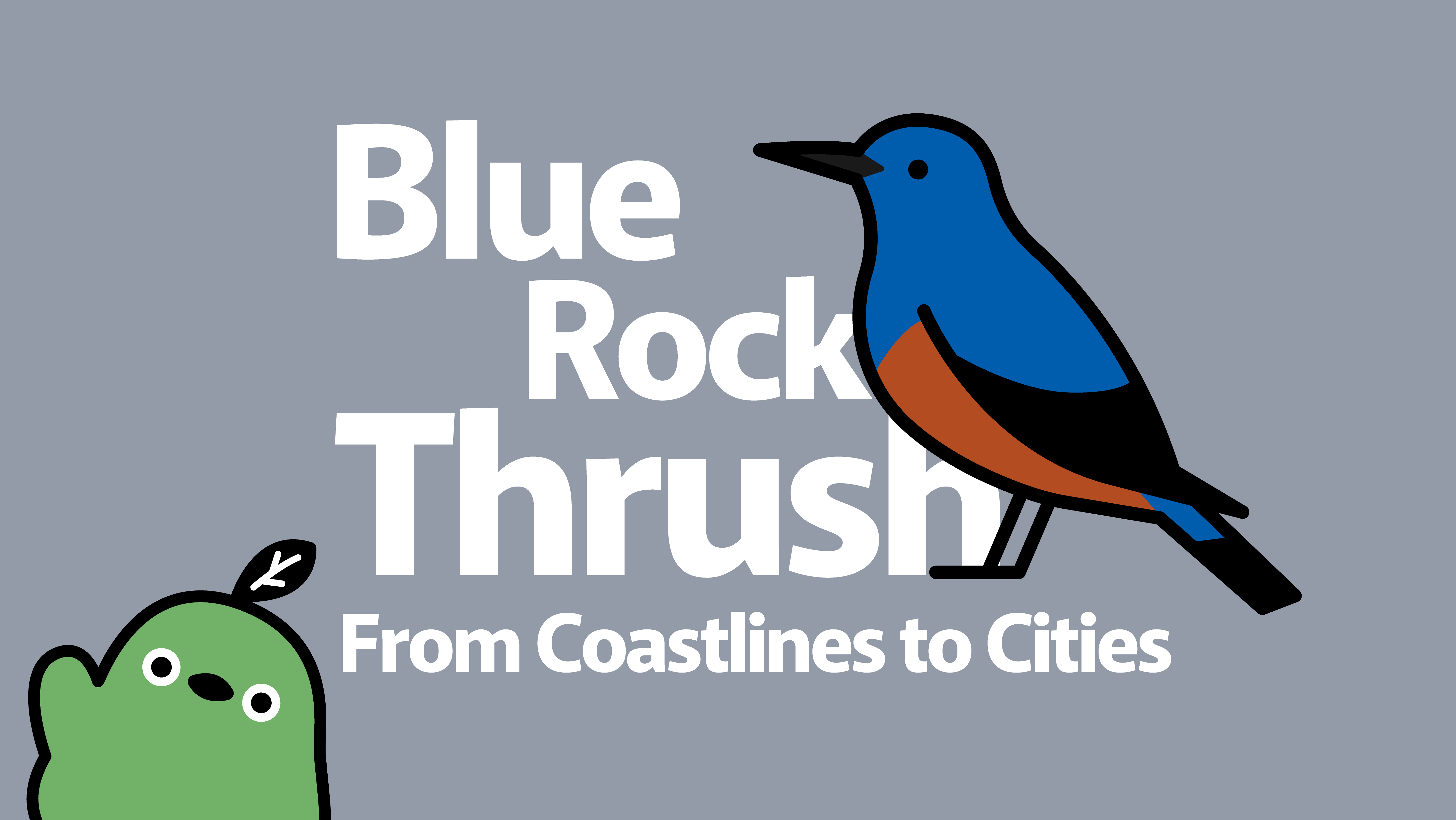
Have you ever encountered a small blue bird while strolling along the rocky shores or harbors? It might have been the Blue Rock Thrush.
The Blue Rock Thrush is about 23 cm in length, slightly smaller than the common thrush. The male is distinguished by its dark blue head, throat, and back, with a chestnut-colored chest and abdomen, and distinctly black wings. On the other hand, the female primarily sports a brownish color with a quail-like pattern. Young males resemble females in color and change their appearance as they age.

In terms of diet, the Blue Rock Thrush is carnivorous, preying on crustaceans, insects, and lizards. In urban areas, it’s also known to feed on human leftovers. Preferring solitary life, the bird sings beautifully in spring, a trait typical of the Muscicapidae family. Its song is complex, especially lively on sunny days.
Originally native to coastal regions, the Blue Rock Thrush expanded its habitat to inland areas from the 1980s. Now, it’s commonly seen in large cities in regions like Kanto and Kinki, perching on power lines or flying between buildings. Its beautiful song can even be heard in urban settings. While it usually nests in rocky crevices, in cities, it adapts by nesting on rooftops or in gaps in buildings, close to human habitation.
The Blue Rock Thrush adds color and melody to our lives with its vivid hues and intricate songs. Next time you spot one, take a moment to enjoy its beauty! See you next time.


