
Hello, everyone! Today, let’s talk about the delightful Long-billed plover, a small bird whose presence is much larger than its size!
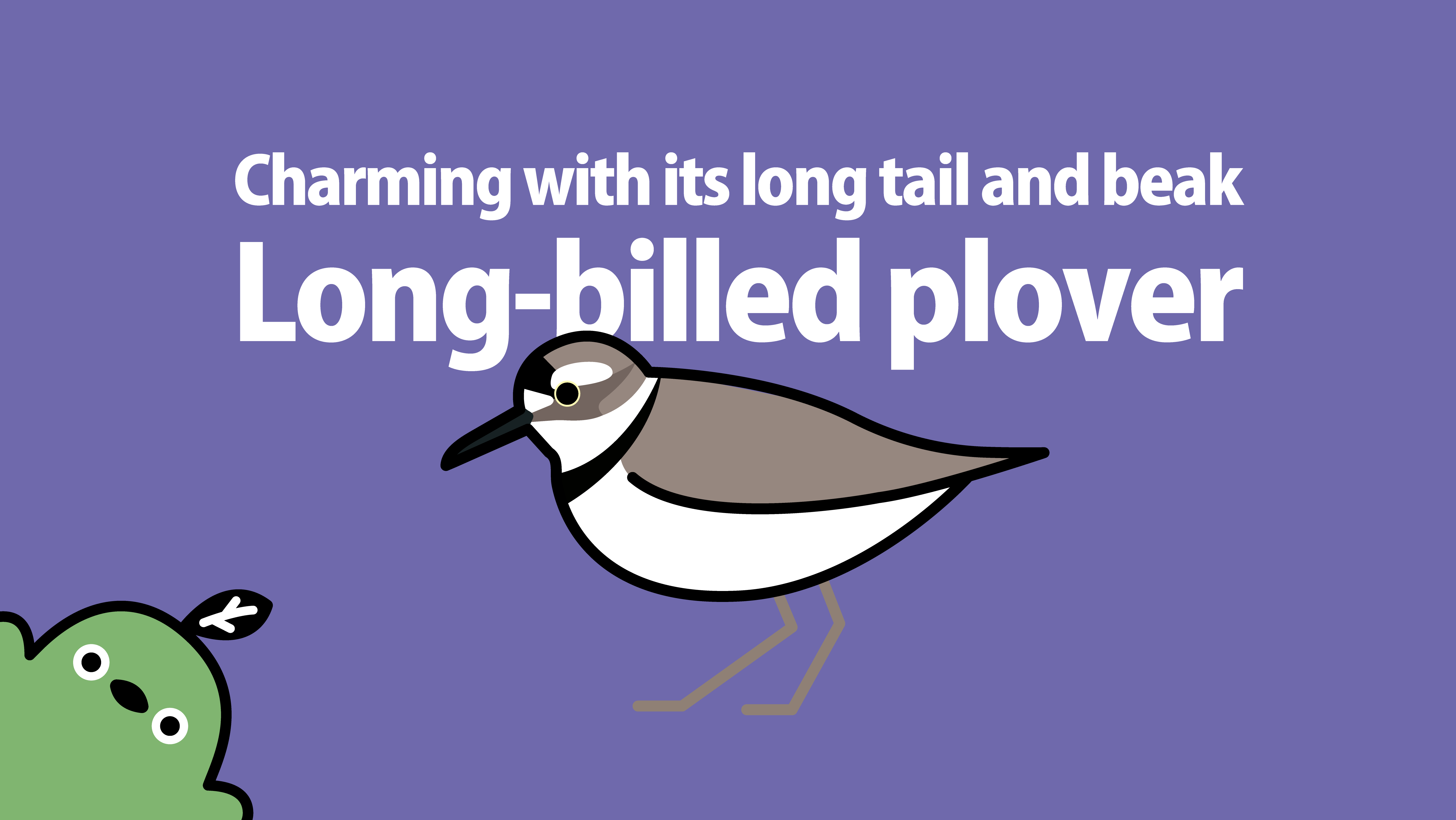
The Long-billed plover is a small bird of the plover family, measuring about 21cm in length. Its most distinctive features are its long legs and long black beak. The black lines on its forehead and neck are striking. The top of its head and back are gray-brown, while its belly, above the eyes, and the upper part of its beak are covered in white feathers. Around its eyes, it has thin yellow eye rings. In summer, the patterns on its head and neck turn black, while in winter, they change to dark brown and become a bit paler. You can enjoy watching the beautiful changes in its feathers throughout the seasons.

This little bird inhabits various regions of Japan, including Honshu, Shikoku, Kyushu, Hokkaido, and the Southwestern Islands. It particularly favors riversides in the middle and upper reaches of rivers, as well as rice paddies near water. Its diet is carnivorous, feeding on insects, arthropods, and earthworms near the water.
During the breeding season, the Long-billed plover builds nests on riverbanks. The nest-building process is fascinating, with both males and females cooperating to create a comfortable nest using pebbles and dried grass. The eggs are blue with brown spots, resembling small stones. Both parents incubate the eggs, and the chicks leave the nest soon after hatching, following their parents. If predators approach, the parents feign injury to lure them away from the nest and protect their young.
A bird similar to the Long-billed plover is the “Little Ringed Plover.” It is believed that the Long-billed plover was named in contrast to this bird. The key to distinguishing between the two is the size of the body and the length of the beak. The Long-billed plover is slightly larger with a longer beak, and its eye ring is a pale yellow, which is another distinguishing feature.
In Japan, the Long-billed plover is known as a resident bird, and some migrate south in the winter. Unfortunately, it is considered a near-threatened species. Therefore, when you encounter it in nature, observe it quietly and strive to protect its habitat. The natural drama woven by this small bird is a precious treasure for us too. See you again next time!


