
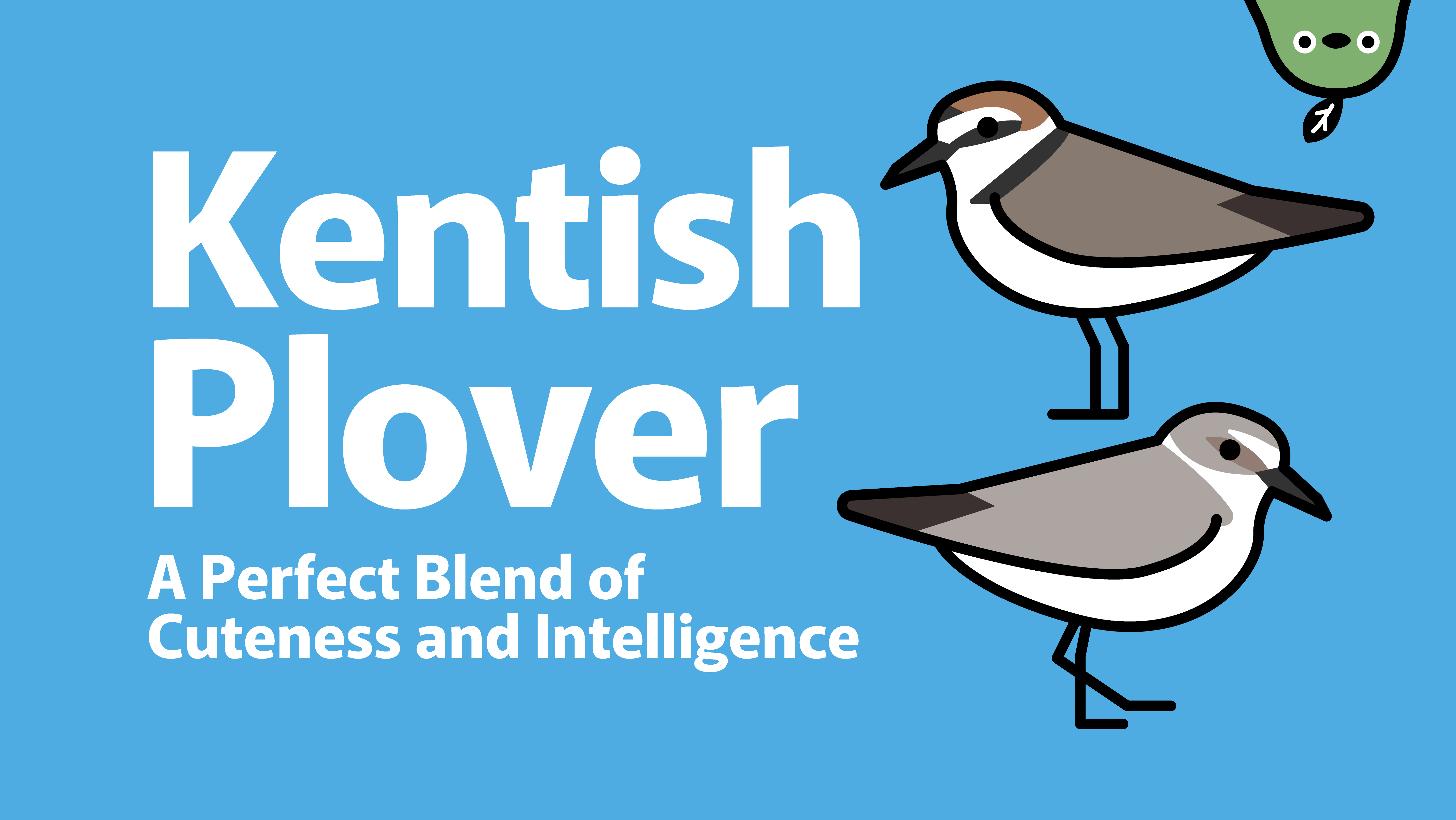
Hello! Today, let’s talk about the Kentish Plover, an incredibly adorable bird. Often seen at beaches and tidal flats, this little bird has a fascinating lifestyle.
The Kentish Plover measures 10 to 17.5 cm in length. Its back is a grayish-brown color, while its belly is pure white. A white stripe runs from its forehead above the eyes, and a gray line extends from its eyes to the back of its head. During summer, the males have a black crown and an orange nape, making them quite colorful. Females and winter males, however, have a grayish-brown crown, blending seamlessly into the sandy surroundings to camouflage themselves from predators.
In Japan, the Kentish Plover is known as a summer bird, coming to breed in the summer, or as a resident bird seen year-round in areas south of Honshu. In the Southwest Islands, it is often seen as a winter bird.

You can spot the Kentish Plover on sandy beaches, tidal flats, midstream river areas, lakes, and ponds. Outside of breeding season, they form flocks ranging from a few dozen to sometimes several hundred birds. Their diet mainly consists of small creatures such as insects and polychaete worms that live near water. Their hunting technique is unique: they move in a quick zigzag pattern to approach and capture their prey in one swift move.
The Kentish Plover creates nests by digging shallow depressions in the sand and lining them with small stones or shells. Unlike birds like the Little Tern, which nest on bare ground, they often nest in the shadows of low grass. In Japan, their breeding season is from April to July. When predators approach the nest, the parent birds perform a “distraction display,” acting as if they are injured to draw attention away from their chicks and protect them.
Their call is a high-pitched, clear “pi-lu pi-lu pi-lu.” They often call when taking off or sensing danger. It’s a delight to hear this charming sound while walking along the beach.
Once abundant, the number of Kentish Plovers has been declining in recent years. Changes in coastal and tidal flat environments and human activities seem to be affecting their populations. It’s essential to protect the habitats where Kentish Plovers can live safely. Next time you visit a beach or tidal flat, be sure to look out for the Kentish Plover. See you next time!


