
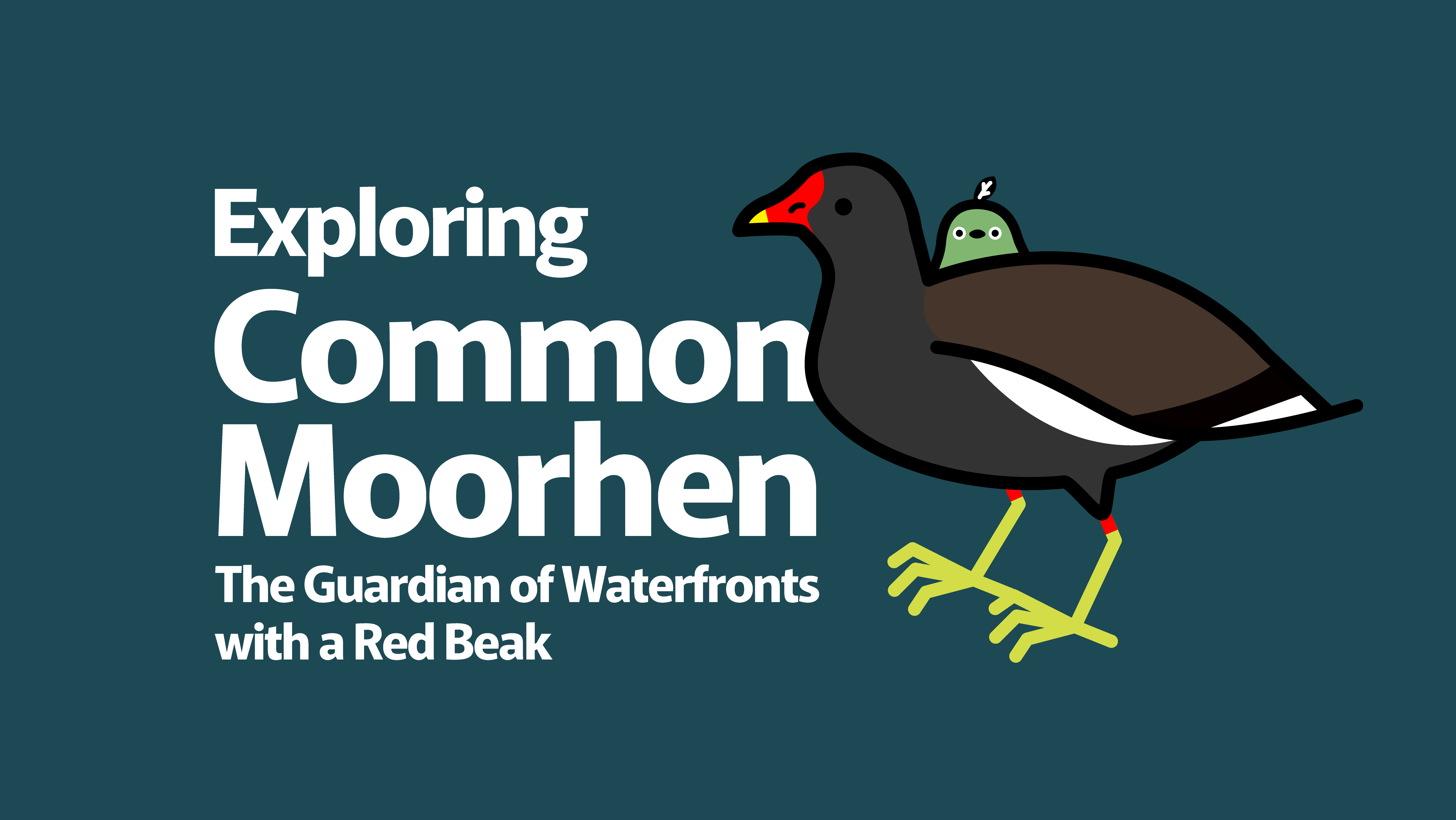
Hello, everyone! Let’s talk about the “Common Moorhen,” a bird that stands out in waterside landscapes with its striking red beak. Let’s delve into the world of this beautiful creature.
The Common Moorhen, a member of the Rallidae family in the order Gruiformes, is about the size of a pigeon, measuring 30-35 cm in length. Its most notable feature is the prominent red ‘frontal shield’ on its forehead. During the breeding season, this part becomes even more vividly red, showing us a dazzling sight. Additionally, its body is covered in glossy, jet-black feathers, with a greenish tint on its back.
When they are chicks, moorhens have a bald patch on the top of their heads and possess a beak similar in color to the adults’ red and yellow one. As they grow, their appearance changes and becomes even more attractive. Interestingly, moorhens sometimes practice “brood parasitism,” like cuckoos, laying their eggs in the nests of other birds.

Moorhens are timid by nature, always seeking hiding places. They are often found near areas where they can hide, such as under lotus leaves or in reed beds. The name “Moorhen” originates from the idea of a bird that ‘guards the rice field.’ This name is simple and easy to remember. Preferring watersides like rivers, ponds, and rice fields, moorhens play a vital role in maintaining the ecological balance there.
Although moorhens are waterbirds, they do not have webbed feet. They are not particularly adept at swimming or flying, but they have hidden strength in their legs, which allows them to maintain balance in unstable places and to walk or climb on tree branches. This unique ability is one of the moorhen’s charming features.
In the Edo period, moorhens were considered a delicacy, counted among the “three birds and two fish.” However, their numbers have decreased in recent years. In 2022, they were removed from the list of huntable species and are now protected. This is good news for both the moorhens and us.
The moorhen, with its impressive red beak, captivates our interest with its unique features and ecology. Next time you stroll along a waterside, pay special attention to this vibrant bird. You might discover something new!


