
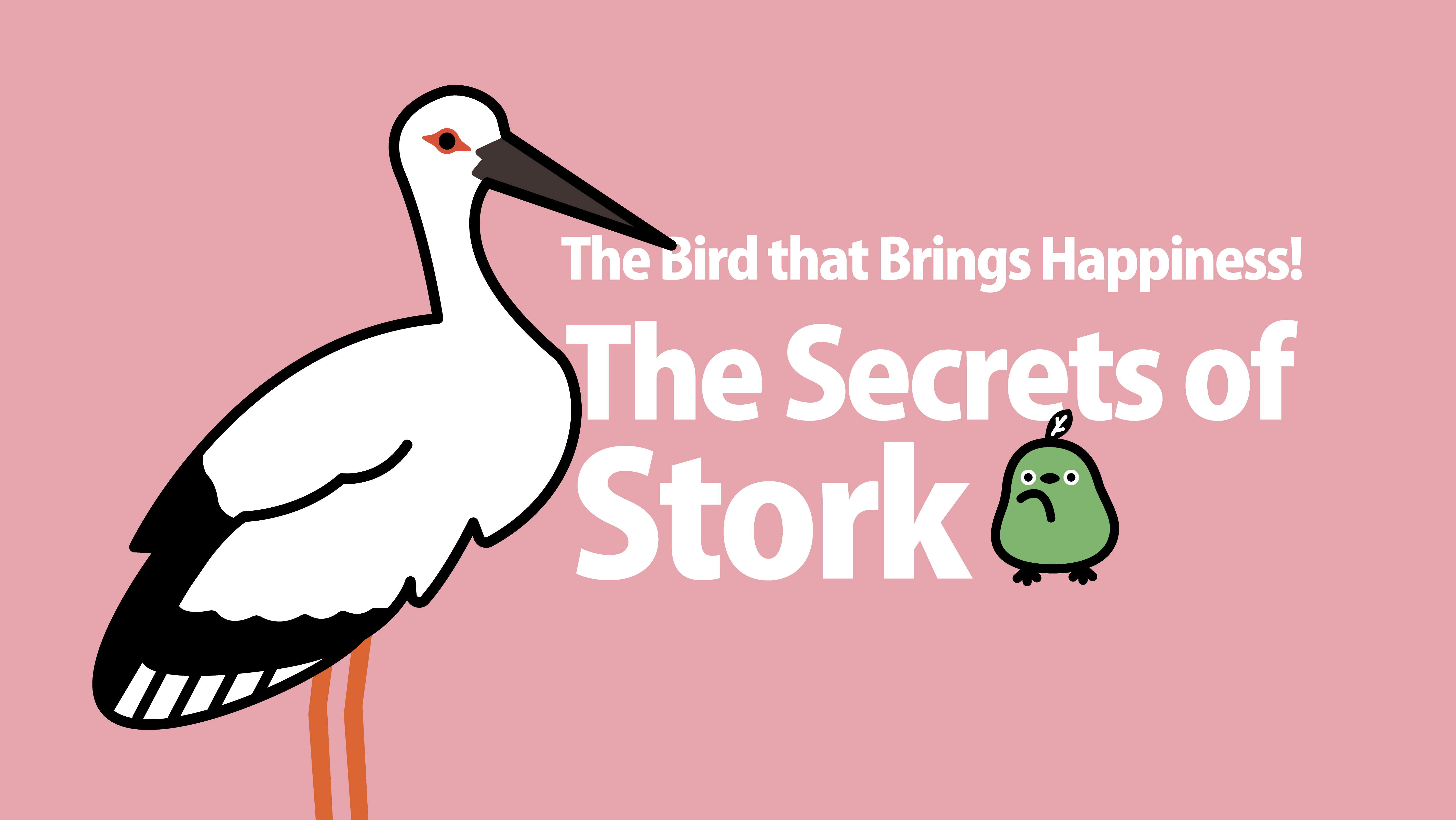
Hello, everyone! Today, let’s talk about that big white bird, the stork. You might have heard its name at least once.
The stork is a large bird, reaching about 115 cm in body length. When its wings are spread, they can span about 2 meters, and its characteristic shining white feathers are quite striking. The primary and secondary feathers are black, and some black feathers can be seen in young birds as well. Their silhouette, cutting through the wind, is almost like a ship in the sky. Storks, being voiceless, use a clattering sound made with their beaks for intimidation and to show affection. Their diet consists of frogs, small fish, and insects. They prefer to live in paddy fields and wetlands, where they search for food.
Their main habitats are in northeastern China and the Amur region, and in winter, they migrate to Japan, Korea, Taiwan, etc. In Japan, they were once a common sight but became extinct in the wild in 1971. Thanks to people’s efforts, they were reintroduced to the wild in 2005.

Storks have a habit of building huge nests on trees, with a diameter of about 2 meters! While natural trees like Japanese red pine were used in the past, artificial nesting platforms are also provided now. Moreover, storks do not form colonies and are known to form deep bonds with their partners, with whom they spend their entire lives.
When we talk about the bird that brings babies, it’s actually the “European White stork.” Genetically, this species is different from the Japanese stork. Although they look similar, the European White stork is characterized by its red beak and lives in Europe and northern Africa. Their numbers are not decreasing! The legend dates back to medieval Europe. It was common to marry at the summer solstice and give birth in spring, coinciding with the return of the storks in spring. Their habit of building nests on roofs and chimneys led people to interpret it as a sign of happiness coming to the house.
In Japan, there are also various stork legends. In Kukuhi Shrine in Toyooka City, Hyogo Prefecture, there is a legend recorded in the Nihon Shoki about a prince who first spoke to a stork, and it’s believed to bring prosperity and fertility. In Kounosu City, Saitama Prefecture, the stork is revered as a guardian deity of the land and is even reflected in the place name. The bird has been loved by people since ancient times.
The stork, once on the brink of extinction, is now an important existence in Japan’s nature, harmonizing with the ecosystem. Let’s continue to protect the stork and watch over its beautiful figure dancing in the sky!


